Emperor Franz Monument in the Hofburg Courtyard, Amorem Meum Populis Meis
In the middle of the Hofburg's inner courtyard, In der Burg, an emperor in Roman dress stands on a tall pillar with his right arm stretched out over the square. Four bronze women sit round his feet. Most people walk past him on the way from the Michaelertor to the Sisi Museum or the Swiss Gate without looking up.
He is Franz, the last Holy Roman Emperor and the first Emperor of Austria, and the words cut under him are the line people remember: AMOREM MEUM POPULIS MEIS, my love to my peoples, taken from his will.
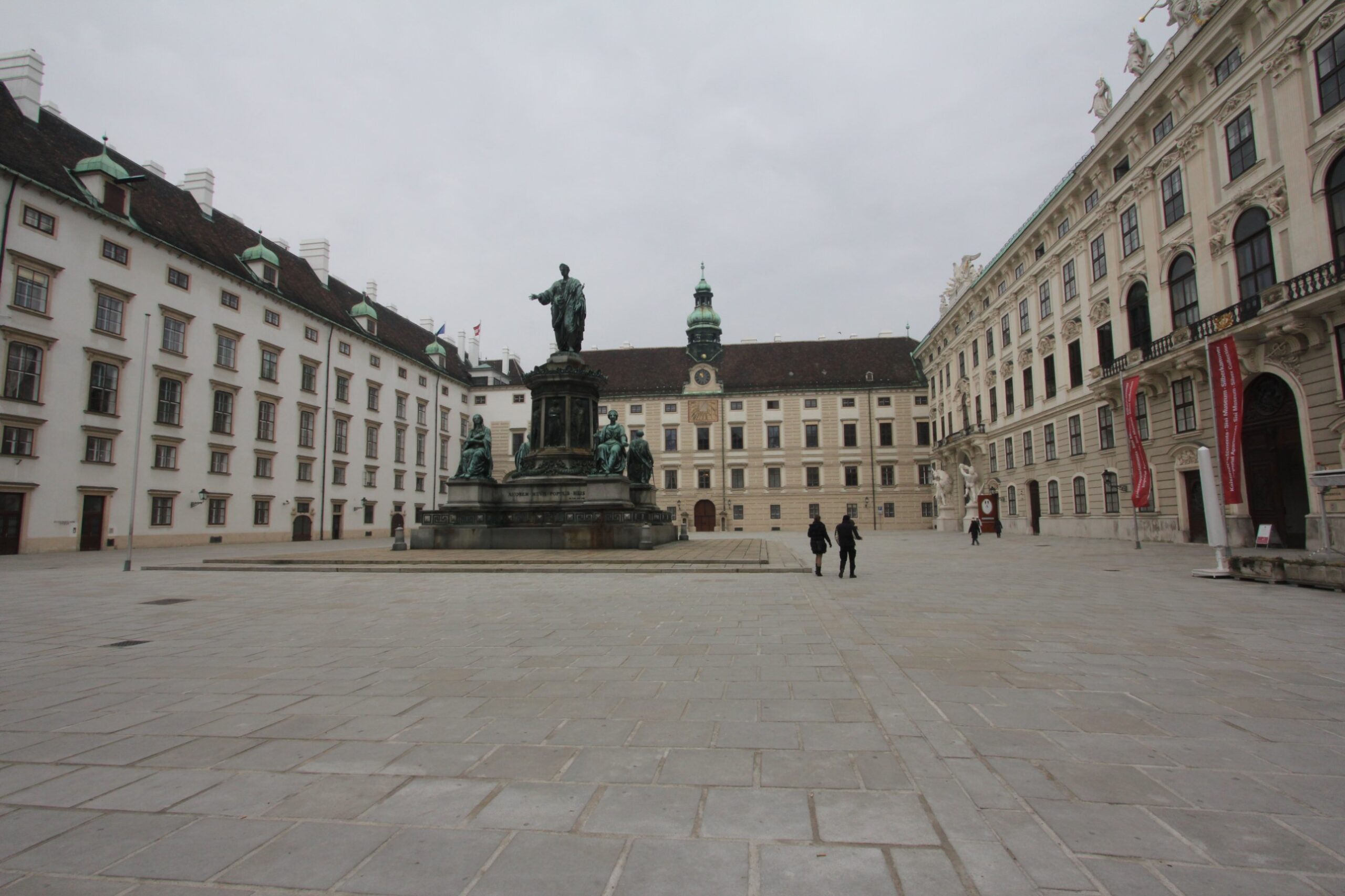
Photo: Virtual Travel Guide
Two titles, one emperor
Franz was born in 1768 and became Holy Roman Emperor as Francis II in 1792. In 1804, as Napoleon made himself Emperor of the French, Franz declared himself Emperor of Austria as Francis I, and in 1806 he dissolved the Holy Roman Empire altogether. He reigned until his death in 1835, through the Napoleonic wars, the Congress of Vienna and the long conservative peace that followed under his chancellor Metternich. That's why the monument calls him Franz I, and why historians write Francis II/I.
The monument
His son and successor, Emperor Ferdinand I, commissioned it from the Milanese sculptor Pompeo Marchesi. The foundation stone was laid in 1842 on the anniversary of the Battle of Leipzig, the great victory over Napoleon in 1813, and the finished monument was unveiled in June 1846. The courtyard was renamed Franzensplatz for the occasion. The name lasted until 1919, when it went with the monarchy.
Franz stands in Roman costume on an octagonal pillar, the gesture of a ruler addressing his people. Around the base sit four colossal bronze figures: Faith, Strength, Peace and Justice. Bronze reliefs on the sides of the pillar show the work of his subjects, commerce and industry, mining, farming, and the arts and sciences.
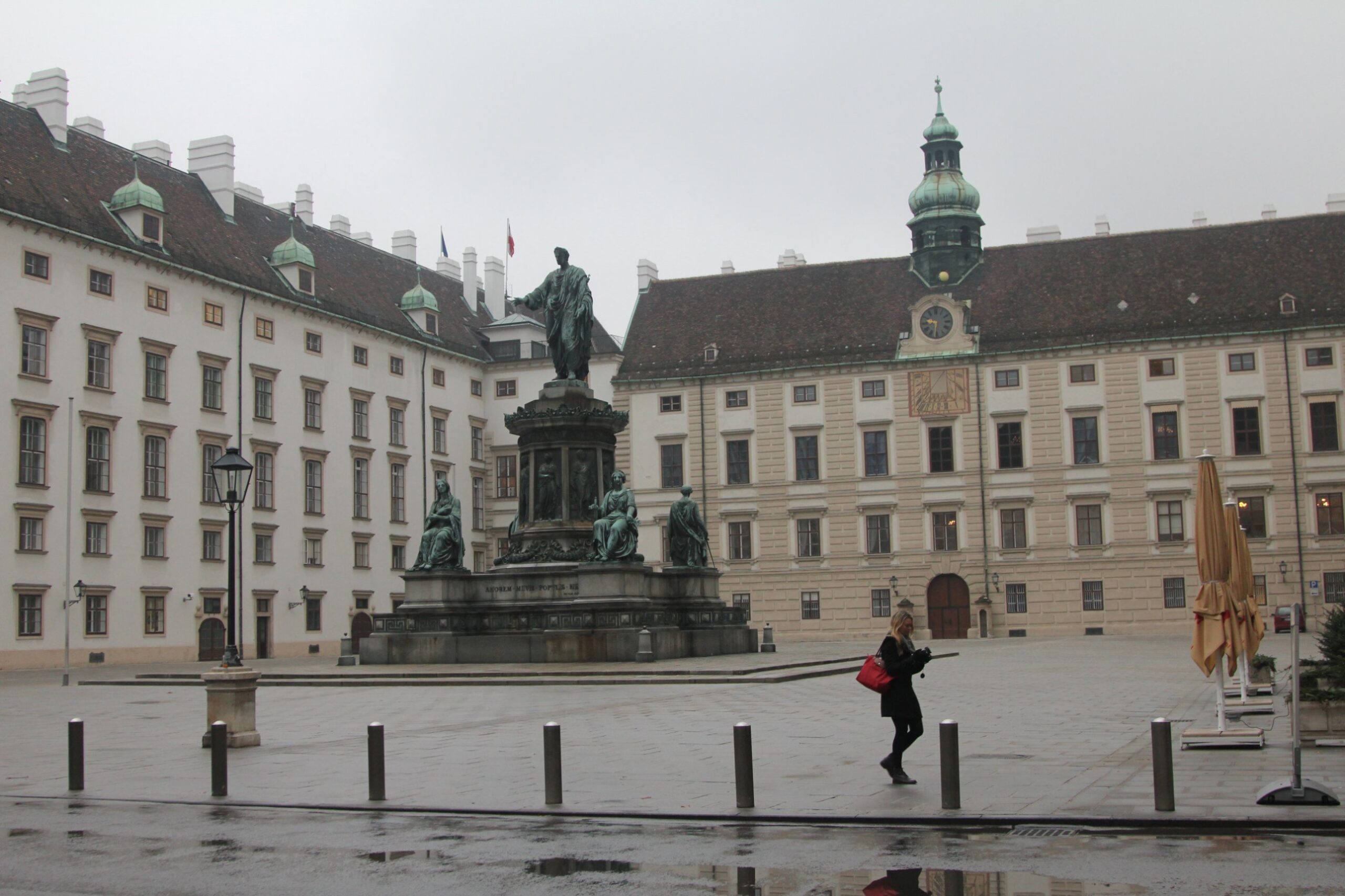
Photo: Virtual Travel Guide
Where it stands
The monument faces the Swiss Gate, the 1552 entrance to the oldest part of the palace. Behind it is the Amalienburg with its sundial and clock tower. To the left, as you face the Amalienburg, is the Leopoldine Wing, where Maria Theresa lived and the Federal President works today. To the right is the Imperial Chancellery Wing, home of the Imperial Apartments, whose entrance is under the dome on Michaelerplatz.
So the old emperor stands at the centre of the palace with the whole of Habsburg Vienna round him: the Renaissance castle, the Baroque state rooms, the apartments where his grandson Franz Joseph lived, and the office of the republic that replaced them.
For the wings around the courtyard, see our guide to the whole palace.